
SAP SuccessFactors 2H 2026
Four strategic shifts HR leaders should assess
The 2H 2026 updates span core HR, talent, recruiting, workforce scheduling and AI. Their value depends on how well an organisation’s data, processes and ownership connect across those areas.
Release season often starts with a familiar question: What’s new? A more useful question is: What needs to be in place for the changes to make a difference?
SAP frames the 2H 2026 release as another step towards Autonomous HCM: bringing AI, workforce data and HR applications together to automate work, redesign processes and support decisions. That is a strategic direction as well as a set of product changes; capabilities are released on different timelines and may require configuration or additional licensing. SAP’s 2H 2026 release overview describes the direction and highlights innovations across the employee lifecycle.
The product relationships are central to understanding what customers need to assess. SAP SuccessFactors is SAP’s cloud HCM suite. Employee Central provides core employee and organisational data. Job Profile Builder (JPB) structures job roles and profiles, while Talent Intelligence Hub (TIH) manages skills and other talent attributes that can be mapped to roles and reflected in an employee’s Growth Portfolio. Recruiting supports talent acquisition in the SuccessFactors suite; SmartRecruiters is a distinct recruiting platform that SAP is integrating with the suite. Workforce Scheduling connects workforce information from SuccessFactors with labour demand and scheduling capabilities in SAP Digital Manufacturing. SAP’s AI assistants and agents are being introduced into these processes, with access and actions shaped by the data, workflows and permissions in the underlying applications.
SAP develops the products. Customers remain responsible for their processes, data, configuration and governance. Effective People (EP), an SAP SuccessFactors advisory and implementation partner, helps customers understand how product changes relate to their landscape and plan adoption. The opening spotlights in EP’s release briefings add a practical lens: start with the business outcome, understand what it depends on, and decide what is ready for your organisation.
1. Workforce Scheduling: assess fit across technology, process and people
Our experience across SuccessFactors programmes shows that scheduling fails on readiness, not on features. SAP SuccessFactors Workforce Scheduling is designed to connect workforce demand with shift planning. In the briefing, Effective People’s workforce management lead described capabilities released in Q3 2026: planners can define shift demand by work centre, headcount and skill requirements, then review system-proposed schedules using employee skills, absences and time data.
The advice was to assess technology, process and people readiness before starting a scheduling programme. Workforce Scheduling depends on reliable employee and job data in Employee Central, maintained skills in Talent Intelligence Hub, healthy time tracking and a defined source for labour demand. It also depends on clear ownership of the schedule, agreed rules for exceptions and planners and employees who can use the system.
The system proposes schedules; planners remain involved in reviewing and publishing them. That matters for adoption and operational trust. The briefing also covered roadmap items, including demand-planning integration and agentic orchestration. The distinction is important: these are future developments, not part of the Q3 capabilities described as released.
The useful question is not simply whether SAP has released a scheduling product. It is whether its design fits your demand drivers, workforce data and operating processes.
2. SmartRecruiters: treat the move as a transformation
Two recruiting platforms mean two release cadences to watch. SAP is connecting SmartRecruiters with SAP SuccessFactors Recruiting. SmartRecruiters remains a distinct platform, with SAP developing integrations between the two. Current and planned connections cover areas such as career sites, organisational data, applicant data and migration support.
Effective People’s SmartRecruiters spotlight advised customers to treat a move as a new implementation, not a lift-and-shift. Migration tools may help analyse and transfer some Recruiting configuration, but they do not determine which processes should move or whether those processes should be reproduced unchanged. An unprepared move could stall hiring operations during the first quarter after go-live.
A considered transition starts with questions about the existing recruiting experience:
Which limitations in SAP SuccessFactors Recruiting affect recruiters or candidates?
Which processes reflect business needs, and which are shaped by system constraints?
How should the candidate experience change?
Which integrations, data flows and external assessment tools need to be reconsidered?
SmartRecruiters also has a faster release cadence than SAP SuccessFactors’ half-yearly cycle. That can speed up innovation while giving you less time between changes to assess and test them. Assign ownership for release monitoring and impact assessment.
The briefing described future connections between SmartRecruiters’ Winston and SAP’s Joule. That is product direction, not a reason to assume the two platforms already operate as one system.
3. Talent Intelligence Hub: make migration a talent-strategy decision
Having delivered 1,400+ SAP SuccessFactors projects across territories and industries, we know one pattern well: skills and job data touch more processes than anyone expects. Job Profile Builder supports job architecture and job roles. Talent Intelligence Hub manages skills and other talent attributes, including information in an employee’s Growth Portfolio.
Together, these can provide foundations for talent processes such as learning, career development and recruiting, depending on your configuration and integrations. SAP describes Talent Intelligence Hub as a framework for managing organisational attributes, with Growth Portfolio connecting role-specific and person-specific attributes.
The Talent Intelligence Hub spotlight framed a move from Job Description Manager or Center of Capabilities as a business transformation, not just a technical migration. Those legacy tools may hold content used by other processes, including Performance & Goals, career development and recruiting. Misjudge the move and you could disrupt career development and recruiting data within the next two release cycles. Identify what you use, where the data is consumed and how it is governed before deciding how to migrate.
A technical readiness check is only the starting point. Is your current job architecture and competency content still relevant? Should you introduce a skills-based approach? Who will maintain that content over time? Skills and job architecture need ongoing ownership; they are not configuration you set once and forget.
The 2H release adds ways to classify skills in job roles as critical or optional and to map certificates to roles. SAP documents the certificate-to-role mapping capability; the briefing explains how role-linked skills and certificates can appear in employees’ Growth Portfolios. These capabilities can help employees prioritise development, provided the underlying roles, skills and proficiency expectations are meaningful and maintained.
4. Agentic HR: start with outcomes, not the agent catalogue
SAP’s agentic HR direction extends Joule and specialised agents across HR processes. The Tech spotlight’s advice was to build an AI roadmap around HR outcomes, not around whichever agents happen to be available. SAP’s AI capabilities and rollout continue to evolve, so a roadmap based on a static feature list can quickly become outdated. SAP has also described parts of its AI portfolio as rolling out in phases.
The consultant identified HR services and operations as promising areas to assess because high volumes of requests, repetitive manual work and recurring errors may offer measurable opportunities to improve service or reduce effort. Establish a baseline first: current case volumes, resolution times, payroll errors or time spent on a process. Then define the outcome to improve and assess whether AI can help.
That outcome-first approach makes AI’s dependencies clearer. Joule and its agents work with SAP applications and data; their use depends on suitable data quality, role-based permissions, workflows, integrations and human approval. You also need to understand usage costs, assign owners and decide how to test and govern new capabilities.
What new AI agents are in the 2H 2026 SAP SuccessFactors release?
It does not list a full agent catalogue, and SAP describes parts of its AI portfolio as rolling out in phases. Check SAP’s 2H 2026 release overview for the current agent list before you commit budget.
Skills maintenance is a smart place to test an agent because it sits on top of Talent Intelligence Hub. An agent can only act within the skills data, workflows and permissions your applications already hold. Weak attribute libraries produce weak results, however clever the assistants.
So pilot it the outcome-first way. Baseline how skills are maintained today, name the owner, define the approval step and test with a small group. Then widen scope. The same sequence works for any agent SAP adds next.
A practical order: prioritise a business outcome, assess readiness, redesign the process where needed and define governance before enabling the capability. That gives you a reusable approach as SAP adds or changes agents.
Employee Central and Onboarding
Organisational Modelling in Employee Central lets customers plan and compare organisational changes before applying them to the live structure. The Core HR consultant confirmed that Position Management is a prerequisite, so check your current setup before treating it as an immediate option.
The Latest Hiring Experience introduces a redesigned, four-step Add New Employee process for supported hiring and rehiring scenarios. It is configurable, and custom hire templates may need review. It does not cover every employment process, so test it against your actual hiring paths before enabling it. help.sap.com
Onboarding adds changes to internal-hire personal-data collection and compliance processes. The consultant highlighted compliance as a major theme and reminded customers still using Basic Authentication to check their migration position.
Time and Payroll
A new capability can replicate specified absences from SAP Payroll to Employee Central Time Management, where you can monitor replication status. It is relevant where SAP Payroll is the system of record for absences. SAP currently lists France, Italy, Norway and Poland, with customer configuration and support-package prerequisites.
Other Time changes include configurable time-sheet validation rules. Start by identifying errors that repeatedly require correction, then decide whether a rule can prevent them. The Workforce Scheduling spotlight is separate from these Time release items, even though scheduling depends on time data and processes.
Learning and Talent
SAP Learning adds AI-assisted course generation and automatic skill inference for learning items. Effective People’s Learning consultant advised caution with automated skill association: the system uses item and programme information to infer skills and ratings, so review your content and test the results before applying them at scale.
That advice connects back to Talent Intelligence Hub. Learning content can contribute to the wider skills picture, but only if titles, descriptions and attribute libraries are sufficiently clear and governed. Inferred content still needs appropriate review.
Recruiting, Performance and Reporting
Recruiting enhancements move more settings into Admin Center and improve some administrative tasks. Distinguish changes to the existing Recruiting module from SAP’s developing SmartRecruiters integration strategy.
In Performance & Goals, the briefings describe updates to the latest form experience and a continuing transition towards the latest 360 Review experience. If you are considering that transition, check whether your existing form design and features are supported before changing templates.
For Reporting & Analytics, the consultant highlighted the move from Classic Stories to the Optimised Design Experience. Inventory existing Classic Stories and plan conversion, since some configurations may need adjustment. The analyst also clarified that SAP had not announced new timelines in this release for Classic Table Reports, ORD or Canvas; do not conflate those with the Story migration.
Where can you hear these briefings first-hand?
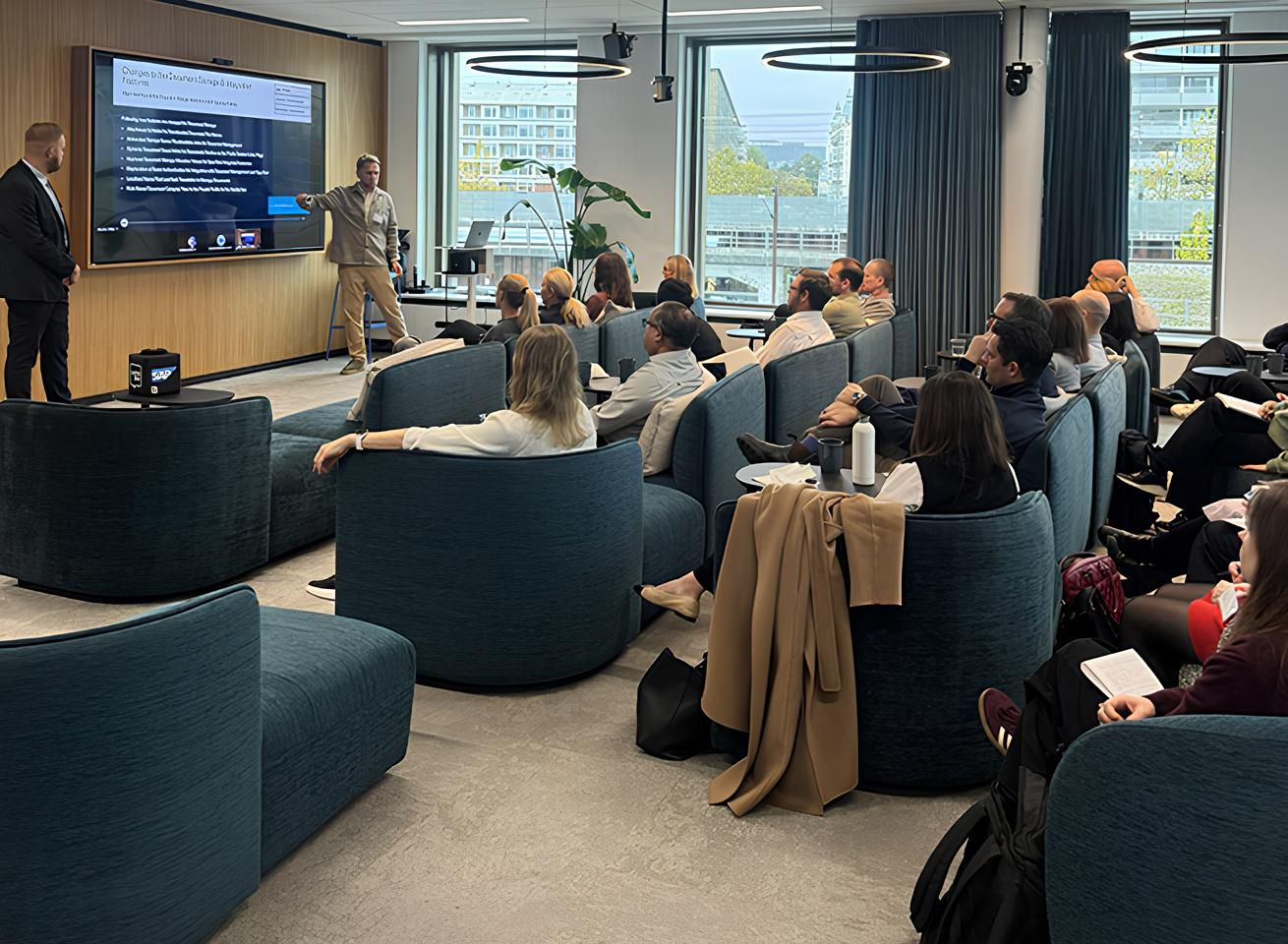
Effective People runs release events and briefings, including a session in Copenhagen. The format suits teams who want to question consultants directly rather than read notes alone. Bring your landscape, your open dependencies and your licensing doubts.
Nordic delivery experience backs those sessions. DSV achieved a 6-month implementation timeline, and the project won the SAP Nordic Quality Award 2018 in the Fast Delivery category. Aramex completed its project within agreed scope and timeframe, and won Silver at the EMEA Quality Awards in the Innovation Cloud Category. Recognition matters because it reflects repeatable discipline.
A practical release-readiness checklist
For each change that appears relevant, work through these steps:
Confirm applicability: check the modules, licences, configuration and countries involved.
Map dependencies: identify the employee, job, skills, time, payroll and recruiting data the capability uses.
Check process fit: decide whether the current process should be carried forward, redesigned or retired.
Test before scaling: use a preview or test environment and involve the administrators, HR teams and managers who will use the change.
Assign ownership: name the people responsible for data, configuration, governance and ongoing release monitoring.
Separate now from next: distinguish what is available, what requires configuration and what remains roadmap.
The 2H 2026 release is not one migration or one AI project. It is a set of related decisions about how SAP SuccessFactors modules use shared data, how skills support talent processes and where automation can improve work. Across the four spotlights, Effective People’s advice is consistent: begin with your outcome and landscape, then decide which capabilities are ready to support it. Own that sequence, and you become the trusted advisor who separates hype from meaningful progress for your organisation.



About the author
Christian Holst is the Senior Director of Global Consulting Services at Effective People.
Christian Holst is an experienced solution architect and expert in SuccessFactors, SAP HCM/ERP, and SAP Cloud Platform. He has provided End-to-End guidance on HR and topics like technology choice, process advisory, roll-out, and roadmap of solutions.
Christian is professionally certified in SuccessFactors Employee Central, and certified in other modules like Learning Management, Performance & Goals.
Ready to make the most of the SAP SuccessFactors 2H 2026 release?
Not sure which updates deserve your attention? Our experts can help you navigate the latest changes, understand what they mean for your organisation, and identify where to focus next. Book a 30-minute Mini Solution Review to explore opportunities to improve your existing environment and support model.